
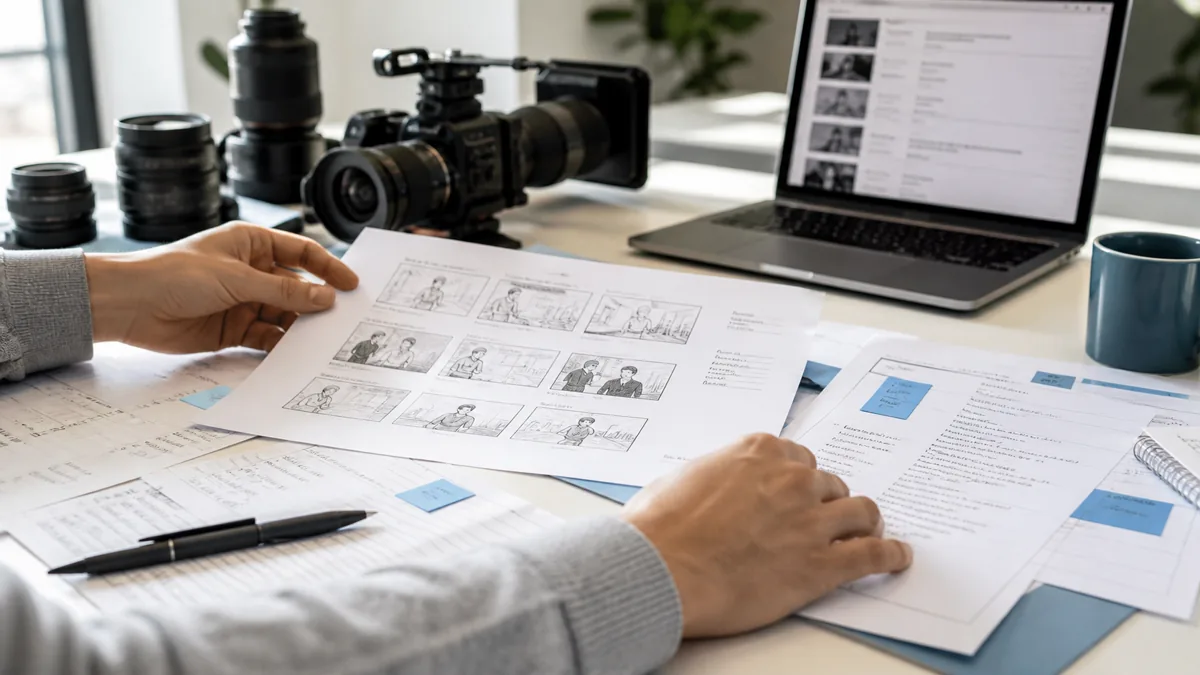
Why a storyboard helps even on small shoots
Many businesses assume storyboards are only for large productions, but even a lightweight one can dramatically improve a straightforward talking-head or product video. It gives structure to the shoot before the camera is rolling.
That structure is useful because business videos often involve several moving parts at once: messaging, framing, supporting visuals, product shots and deadlines. A storyboard makes those decisions visible in advance.
Think in scenes, not paragraphs
A good storyboard does not need to be artistically impressive. The real goal is to translate the message into scenes: what the viewer sees, what they hear and what each moment needs to achieve.
When you plan in scenes instead of treating the whole video as one block of script, it becomes much easier to identify where a demo shot, cutaway, on-screen graphic or presenter close-up will do the most work.
Use it to keep filming efficient
On shoot day, a storyboard acts like a visual checklist. It helps the team capture the must-have shots first and reduces the risk of discovering missing footage only when editing begins.
That is particularly valuable when time with presenters, products or locations is limited. Clear planning protects both the schedule and the finished result.
Keep the plan flexible
The best storyboard is not a rigid document. It is a guide that gives the team confidence while still leaving room for stronger ideas that appear during the shoot.
If the message is clear and the core shots are mapped, you can adapt creatively without losing the thread of the video.