Why the first three seconds matter
On social feeds, people scroll with their thumb and decide almost instantly. Platforms also judge your ad partly on how many people keep watching, so a weak opening costs you twice: fewer viewers and a higher cost per result.
A hook has one job: earn the next few seconds. It does not need to explain the product, list features or show your logo. It needs to make the right person think, “that is about me” or “I want to see what happens next”.
Five hook patterns that work
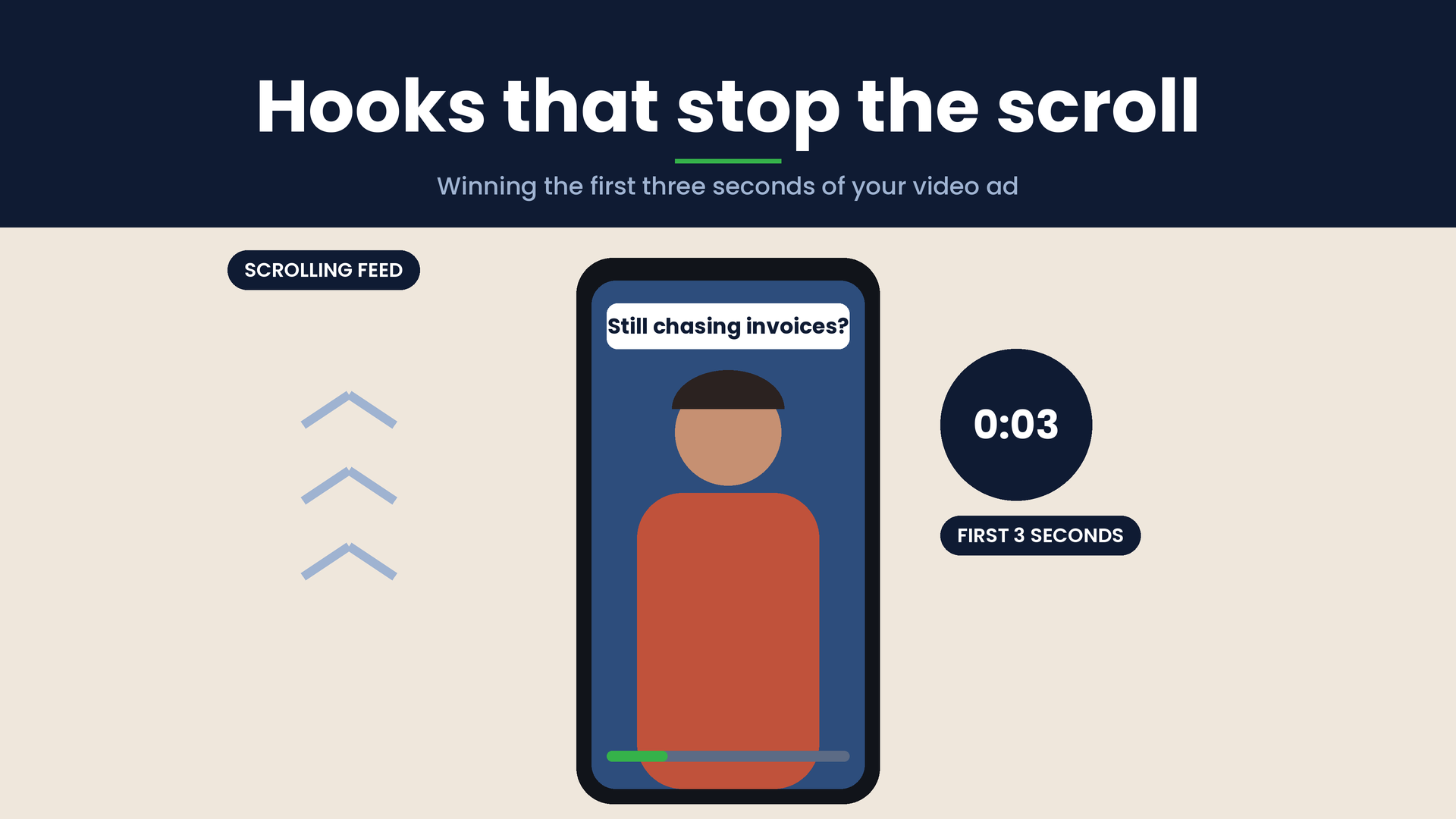
Call out the problem. Open with the frustration your customer already feels, in their words: “Still chasing invoices every Friday?” If it is their problem, they stop.
Show the result first. Lead with the finished outcome — the clean kitchen, the full diary, the dashboard in the green — then explain how you got there.
Make a bold, specific claim. “We cut our onboarding calls by half” beats “We make onboarding easier”. Numbers and specifics feel credible; vague promises feel like adverts.
Ask a pointed question. A question the viewer instinctively answers in their head pulls them in, as long as it is genuinely relevant to them.
Start mid-action. Open on movement: a product being used, a presenter already talking, something being unboxed. Static logos and slow fades are where viewers leave.
Make the hook visual as well as verbal
Plenty of people watch with the sound off, so the opening frame has to work silently. Put a short on-screen line in the first second, keep it to a handful of words and make sure it is readable on a phone.
Frame tightly. A face or a product filling the screen grabs more attention than a wide shot of an office. Cut fast at the start, too: a change of shot in the first two seconds signals that something is happening.
If you use a spokesperson, have them speak straight to camera from the very first frame. No walking into shot, no pause before the line, no “Hi, I’m…”. The introduction can come later, once you have earned it.
Script and shoot several hooks at once
The cheapest way to improve an ad is to film multiple openings for the same body. Write five or six hook lines, shoot them all on the same day and edit each one onto the same middle and ending.
This turns one shoot into a proper test. You are not guessing which line will land; the audience tells you. It also gives you fresh variations to rotate when an ad starts to tire, without booking another day of filming.
Test and read the results
Run the variations side by side with the same budget and audience, and give them long enough to gather meaningful data. Look first at hold rate — how many people watch past the opening seconds — then at clicks and conversions.
A hook that holds attention but does not convert may be attracting the wrong people, so check that it still points towards your offer. Keep the winner, retire the weakest, and write new challengers in the style of what worked.
Common mistakes to avoid
Opening on your logo or company name. Viewers do not care who you are until they care about what you can do for them.
Saving the best bit for the end. If the most interesting moment is at second twenty, move it to the start.
Hooks that overpromise. Clickbait might stop the scroll, but if the rest of the ad does not deliver, people leave and trust drops. The hook should be the sharpest honest version of your message.
Using one hook for every platform. A line that works in a quick vertical story may need reframing for a longer in-feed placement or a different audience.
Getting your hooks right
Strong hooks come from knowing your customer’s problem and filming with testing in mind. At Screen Promos we script, shoot and edit video ads with multiple openings built in, so you can find the version that works. If you would like help planning your next campaign, get in touch and we will talk it through.