
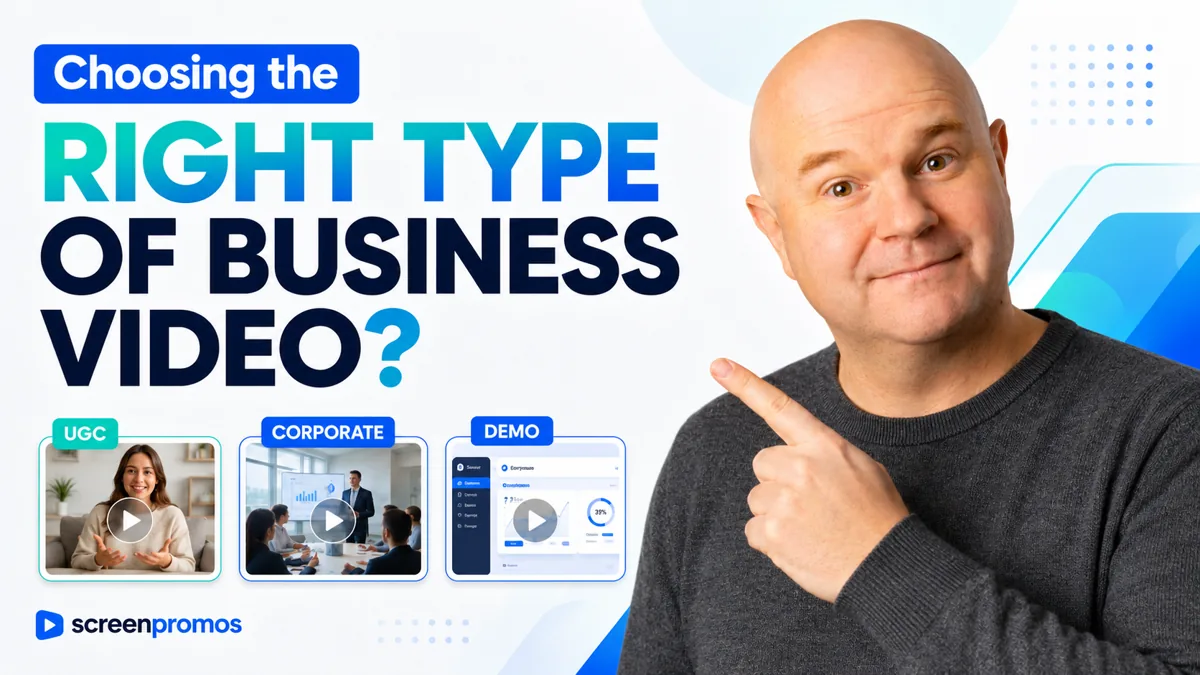
Start with the job the video needs to do
This video focuses on a question many businesses get wrong at the beginning: not how to make a video, but what type of video to make in the first place. That decision shapes everything from tone and structure to distribution and conversion potential.
The strongest choice is usually the format that best fits the communication job. A credibility-building homepage video, a paid social ad and a product walkthrough often need very different approaches.
When UGC is the better option
UGC-style content tends to work well when the goal is relatability, native platform fit and a more informal tone. It is often a strong option for social campaigns, rapid testing and consumer-focused messaging where authenticity matters more than polish.
That does not make it the default answer for every campaign. It works best when the audience expects a more direct, personal style of communication.
When corporate or presenter-led videos fit better
Corporate or presenter-led videos are often the stronger option when a business needs authority, structure and a more polished brand presentation. That can include company overviews, internal communications, recruitment content and trust-building website videos.
These formats give the business more control over language, framing and perception, which is useful when clarity and professionalism are central to the brief.
Where demo videos earn their place
Demo videos become especially valuable when the audience needs to understand how a product works, what it solves or how it differs from alternatives. They are often a natural fit for SaaS, software and service walkthroughs.
Because they are functional as well as persuasive, demo videos need to balance explanation with momentum. The best ones keep the viewer oriented while moving quickly enough to hold attention.
Choose by funnel stage, not habit
A practical way to decide is to ask what the viewer needs at this stage. Early-stage attention might benefit from UGC or social-style content, while mid-funnel education may call for a demo, and later-stage trust may be strengthened by presenter-led or corporate formats.
In other words, the right business video is usually the one that matches the decision the audience is trying to make next.